


Ikko Narahara
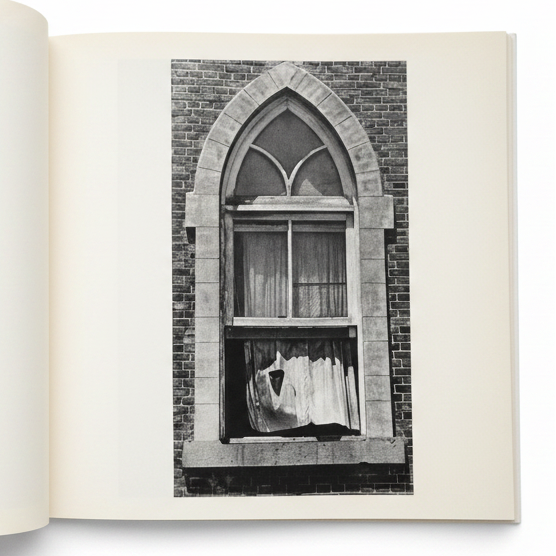
Ikko Narahara/Domains *Asahi Sonorama Edition 王国 奈良原一高
Ikko Narahara/Domains *Asahi Sonorama Edition 王国 奈良原一高
受取状況を読み込めませんでした
Book Design/Shoichi Uchiyama
Review Essay/Masakazu Yamazaki (山崎正和「閉じられた世界の探究者」)
The photographer Ikko Narahara, born in Fukuoka Prefecture in 1931, spent his boyhood as what might be called part of a “transfer family,” moving frequently due to his father’s work as a public prosecutor. Perhaps as a result of this upbringing, Narahara was not only an outstanding photographer—something hardly needing mention—but also an artist whose ability to conduct in-depth research and reportage clearly set him apart. In 1955, he joined Jitsuzaisha (The Existentialists), a group of emerging painters that included Masuo Ikeda and Ay-O. He deepened his exchanges with figures such as On Kawara and Shuzo Takiguchi, and in 1959 co-founded the self-agency VIVO with Shomei Tomatsu and Eikoh Hosoe. While basing himself in cities around the world, he continued his investigative work and published a succession of highly accomplished photobooks, earning international acclaim. This book is the Asahi Sonorama edition, in which the Gunkanjima section of “Human Land,” originally included in Kingdom, Volume 1 of the Images of the Contemporary series published by Chuo Koronsha, has been removed, and new photographs have been added. It consists of two parts: Garden of Silence, documenting a male monastery in Hokkaido, and Within the Walls, documenting a women’s prison in Wakayama. In other words, this edition corresponds to the original version of Kingdom presented at Narahara’s second solo exhibition in 1958. Despite dealing with overtly social themes, the two spaces depicted—both isolated from the outside world—are suffused with an atmosphere of quiet elegance. One cannot help but feel that the reason Narahara chose to photograph these places with such a degree of abstraction lay precisely in the nature of the locations themselves. “Artists see things as a form of self-expression, and thus it is a timeworn commonplace of modern aesthetics that what is seen is merely the trace of the artist’s self-expansion. But is this really a correct commonplace? When encountering an artist such as Ikko Narahara, I find myself secretly inclined to doubt it. (…) When I look at this man’s work, I sense behind it a ‘closed world’ that lies beyond the reach of the artist’s gaze.”
—from Masakazu Yamazaki, Explorer of the Closed World
1931年福岡県生まれの写真家・奈良原一高は、検事であった父親に伴い、少年期はいわゆる「転勤族」であったという。その影響もあってか、写真表現の卓越さは言うまでもなく、取材力において群を抜いた作家であった。
1955年池田満寿夫、靖呕ら新錐画家のグループ「実在者」に参加、河原温や瀧口修造らとも交流を深め、 1959年に東松照明、細江英公らとともにセルフ・エージェンシー「VIVO」を設立。世界各地の都市を拠点にしつつ、取材を進めながら数々の完成度の高い写真集を出版し、世界的な評価を得た。本書は、先に出版された中央公論社・映像の現代シリーズ第1巻「王国」に掃載された「人間の土地」の軍艦島の箇所が削除され、写真も新しく追加された朝日ソノラマ版。北海道の男子修道院を取材した「沈黙の園」、和歌山の婦人刑務所を取材した「壁の中」の2部構成になっている。つまり、こちらが1958年に行われた二回目の個展「王国」からのオリジナル版。社会的なテーマと裏腹に、優美な空気が漂う外部と隔絶された2つの空間。彼がこのように抽象さを持たせて撮ろうと思った理由が、その場所にあったのだと感じずにはいられない。
「作家は自己表現としてものを見るのであり、したがって、見られたものは作家の自己拡張の跡だということは近代美学の言い古された常識である。しかしそれは本当に正しい常識なのか。たとえば奈良原一高のような作家に出あうとき、私はひそかにそのことを疑いたくなる。(中略)私はこのひとの作品を見るとき、その背後に、作家の目の届かない「閉じられた世界」があることを感じるのである。」本文内、山崎正和「閉じられた世界の探究者」より引用。
Published by Asahi Sonorama(朝日ソノラマ)
1978
hardcover
Japanese
Attachment/dust jacket
Condition/good
208*220
Share


合計1万円以上のご購入で国内送料無料